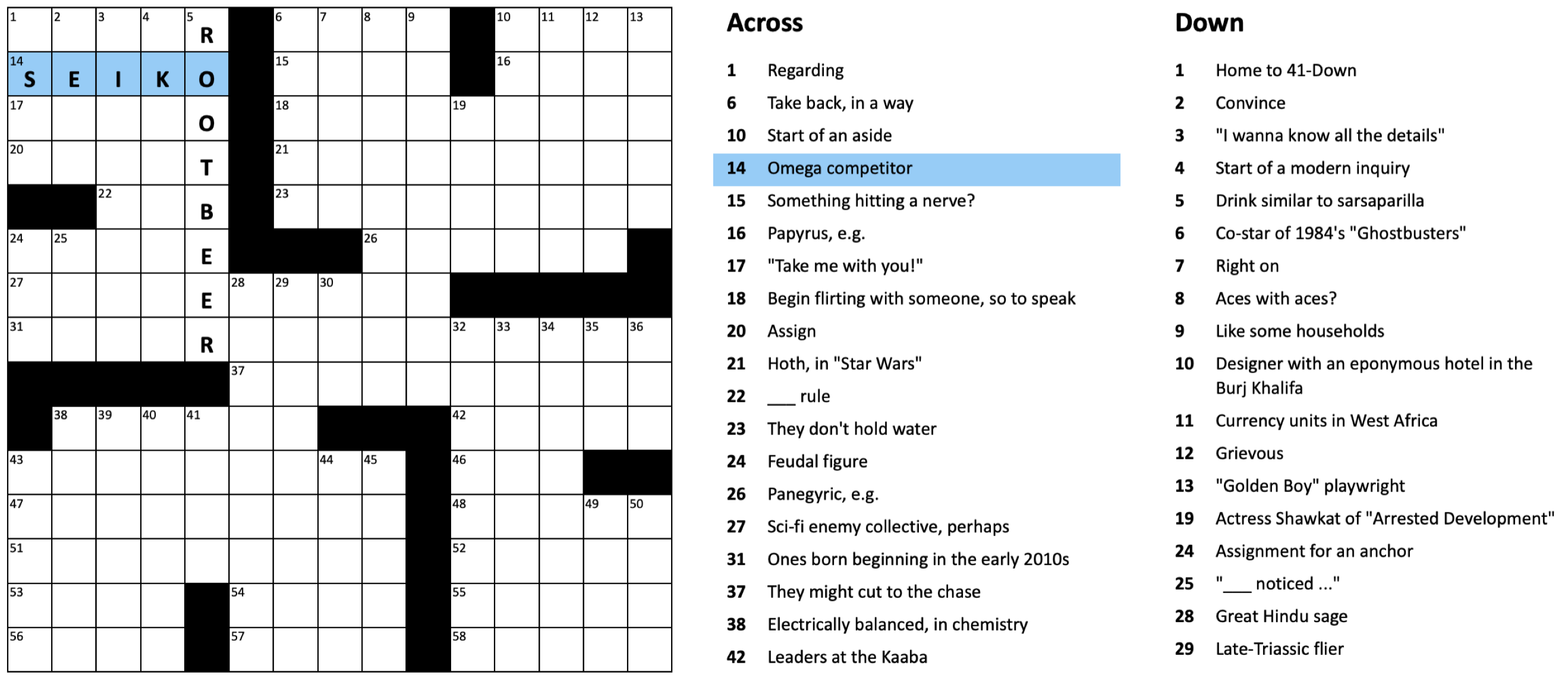

Ever found yourself staring at a crossword puzzle, pen hovering over the squares, completely stumped by a clue? You’re not alone. I’ve been there countless times, and one phrase that often pops up in my mind during those moments is “Crossword Clue For Instance.” It’s not just a random thought—it’s a reminder that crosswords are as much about pattern recognition as they are about vocabulary. For instance, when a clue says “For example,” it’s often pointing to the word “e.g.,” a Latin abbreviation that’s a crossword staple. This simple realization has saved me more than once, and it’s a perfect example of how understanding clue structures can turn frustration into triumph.
Understanding Crossword Clue Structures
Crossword clues are like mini puzzles within the puzzle. They’re designed to mislead, challenge, and ultimately guide you to the right answer. When I first started solving crosswords, I treated every clue as a direct question. Big mistake. Clues often use wordplay, abbreviations, or even foreign phrases to disguise the answer. For instance, “Crossword Clue For Instance” isn’t just about finding a word—it’s about recognizing that “For Instance” is a hint toward “e.g.” This is where understanding clue structures becomes crucial. Over time, I’ve learned to break down clues into their components: the definition, the wordplay, and the indicator words. This approach has made solving crosswords not just easier, but more enjoyable.
Common Crossword Clue Types
Crossword clues come in various forms, each with its own set of rules. Here are some of the most common types I’ve encountered:
- Straight Clues: These are the most straightforward, providing a direct definition. For example, “Capital of France” clearly points to “Paris.”
- Anagram Clues: These involve rearranging letters to form a word. A clue like “Mixed-up letters in ‘listen’” would lead to “silent.”
- Hidden Word Clues: The answer is hidden within the clue itself. For instance, “I’m hiding a word in this sentence” contains the word “hide.”
- Abbreviation Clues: These use shortened forms of words or phrases. “For Instance” often leads to “e.g.,” as I mentioned earlier.
The Role of “For Instance” in Crosswords
“For Instance” is a classic example of an abbreviation clue. It’s a phrase that directly translates to “e.g.,” which is a common crossword answer. When I see “For Instance” in a clue, I immediately think of “e.g.” as a potential solution. This is where the phrase “Crossword Clue For Instance” becomes more than just a keyword—it’s a mental shortcut. Recognizing these patterns has significantly improved my solving speed and accuracy. It’s like having a secret weapon in your crossword arsenal.
Practical Tips for Solving Crossword Clues
Solving crosswords is part skill, part strategy. Here are some practical tips I’ve picked up along the way:
- Start with the Easy Clues: Fill in the answers you’re confident about first. This helps build momentum and provides crossing letters for tougher clues.
- Look for Indicator Words: Words like “see,” “hear,” or “for instance” often signal specific types of clues. These can be your bread and butter.
- Use Crossing Letters: When stuck, look at the intersecting letters. They can narrow down possibilities and lead you to the correct answer.
- Don’t Be Afraid to Guess: Sometimes, taking an educated guess can unlock a whole section of the puzzle. Just be ready to erase if it doesn’t work out.
📌 Note: Always double-check your answers, especially when guessing. One wrong letter can throw off an entire section.
The Psychology Behind Crossword Clues
Crossword puzzles aren’t just about words—they’re about thinking. When I’m stuck on a clue, I’ve learned to step back and approach it from a different angle. This is where the phrase “Crossword Clue For Instance” comes into play again. It’s a reminder that clues often have layers. For example, a clue might seem like a definition, but it could also be an anagram or a hidden word. Understanding this psychology has made me a more patient and strategic solver. It’s not just about knowing words; it’s about knowing how to think like a crossword constructor.
Tools and Resources for Crossword Enthusiasts
While solving crosswords is a mental exercise, there’s no shame in using tools to improve your skills. Here are some resources I’ve found invaluable:
- Crossword Dictionaries: These specialized dictionaries list words commonly found in crosswords, along with their clues.
- Online Solvers: Websites like Wordplay or Crossword Tracker can help when you’re truly stuck, though I use them sparingly to keep the challenge intact.
- Crossword Apps: Apps like The New York Times Crossword or Crossword Compiler offer daily puzzles and tools to track your progress.
The Joy of Solving Crosswords
At the end of the day, solving crosswords is about more than just filling in squares. It’s a mental workout, a way to expand your vocabulary, and a source of endless satisfaction. When I finally crack a particularly tricky clue, the sense of accomplishment is unparalleled. The phrase “Crossword Clue For Instance” has become a symbol of that moment—a reminder that every clue, no matter how obscure, has a solution waiting to be discovered. So the next time you’re stuck on a puzzle, take a deep breath, break down the clue, and remember: every crossword is solvable, one clue at a time.
Related Terms:
- Crossword Clue for Instance meaning
- Crossword Clue for Instance definition
- Crossword Clue for Instance 2
- Crossword Clue for Instance example
- Crossword Clue for Instance nyt
- Crossword Clue for Instance person