
When I first started studying membrane transport in cells, I was immediately struck by how two seemingly similar processes—facilitated diffusion and simple diffusion—could have such distinct roles. Both are essential for moving molecules across cell membranes, but the difference between facilitated diffusion and simple diffusion lies in how they operate, what they transport, and the energy they require. Understanding this difference is crucial, especially when considering how cells maintain homeostasis and respond to their environment. Let’s break it down.
What is Simple Diffusion?
Simple diffusion is the most straightforward form of passive transport. It’s the process by which molecules move from an area of higher concentration to an area of lower concentration, down their concentration gradient. This movement doesn’t require energy or specialized proteins—it’s driven purely by the random motion of molecules. In my experience, this is often the first concept students grasp when learning about membrane transport because it’s so intuitive.
Here’s the thing: simple diffusion works best for small, nonpolar molecules like oxygen, carbon dioxide, and lipids. These molecules can easily pass through the lipid bilayer of the cell membrane without assistance. For example, when you take a deep breath, oxygen diffuses from your lungs into your bloodstream because there’s a higher concentration of oxygen in the air sacs of your lungs compared to your blood. No energy, no proteins—just the natural tendency of molecules to spread out.
What is Facilitated Diffusion?
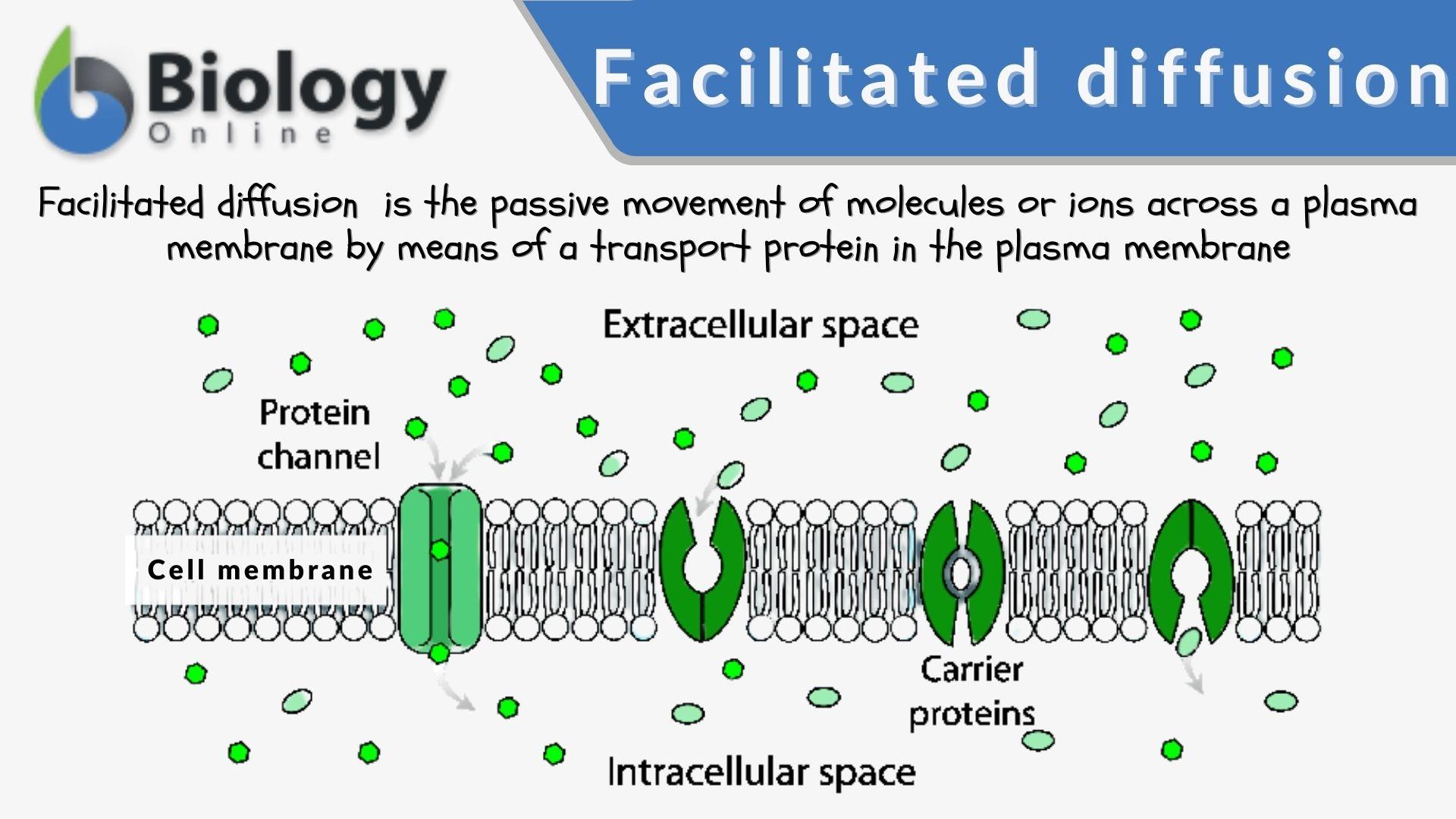
Facilitated diffusion, on the other hand, is a bit more complex. It still relies on the concentration gradient—molecules move from high to low concentration—but it requires the help of transport proteins embedded in the cell membrane. These proteins act like gates or channels, allowing specific molecules to pass through that wouldn’t otherwise be able to cross the lipid bilayer. This process is still passive, meaning it doesn’t require energy from the cell.
In my lab work, I’ve observed how facilitated diffusion is critical for larger or polar molecules like glucose. These molecules can’t diffuse through the hydrophobic interior of the membrane on their own. Instead, they bind to transport proteins like glucose transporters (GLUT), which change shape to allow the molecule to pass through. This is where the difference between facilitated diffusion and simple diffusion becomes most apparent—one relies on the membrane itself, while the other depends on specialized proteins.
Key Differences: A Side-by-Side Comparison
| Feature | Simple Diffusion | Facilitated Diffusion |
|---|---|---|
| Mechanism | Direct movement through the lipid bilayer | Requires transport proteins or channels |
| Molecule Types | Small, nonpolar molecules (e.g., O₂, CO₂) | Larger or polar molecules (e.g., glucose, ions) |
| Energy Requirement | None | None (passive process) |
| Saturation | Does not saturate | Can saturate due to limited transport proteins |
| Selectivity | Non-selective | Highly selective (specific molecules only) |
Who Uses Which Process?
Honestly, cells use both processes depending on their needs. Simple diffusion is ideal for gases and small molecules that need to move quickly and constantly, like oxygen in red blood cells. Facilitated diffusion, however, is essential for nutrients like glucose that need to enter cells but can’t pass through the membrane unaided. In my research, I’ve seen how disruptions in facilitated diffusion—say, due to a mutation in a transport protein—can lead to serious metabolic disorders like glucose transport defects.
When Simple Diffusion Falls Short
Simple diffusion is efficient for what it does, but it has limitations. For instance, it can’t transport charged ions or large molecules, which are often critical for cellular function. This is where facilitated diffusion steps in. Transport proteins like aquaporins (for water) or ion channels (for sodium and potassium) ensure these molecules can move across the membrane without expending energy. That said, facilitated diffusion isn’t perfect—it can become saturated if too many molecules are trying to move at once, which isn’t an issue with simple diffusion.
⚠️ Note: While both processes are passive, facilitated diffusion’s reliance on transport proteins means it can be regulated by the cell, unlike simple diffusion.
Practical Implications
Understanding the difference between facilitated diffusion and simple diffusion isn’t just academic—it has real-world applications. For example, in drug development, scientists need to know whether a drug molecule can cross the cell membrane via simple diffusion or if it requires facilitated transport. This determines how the drug is formulated and delivered. In my work, I’ve seen how this knowledge can make or break the effectiveness of a treatment.
Another practical takeaway is how these processes contribute to cellular health. Simple diffusion ensures a constant supply of gases, while facilitated diffusion regulates nutrient uptake. When either process is disrupted, it can lead to diseases like cystic fibrosis (due to defective ion channels) or diabetes (due to impaired glucose transport). This is where it gets interesting—by studying these processes, we can develop targeted therapies to restore normal function.
The difference between facilitated diffusion and simple diffusion may seem subtle, but it’s fundamental to how cells function. Simple diffusion is the no-frills, always-on process for small, nonpolar molecules, while facilitated diffusion is the specialized, regulated pathway for larger or polar molecules. Both are passive, but their mechanisms, selectivity, and limitations set them apart. In my experience, grasping this difference not only deepens your understanding of cellular biology but also highlights the elegance of how cells maintain balance in a complex environment.